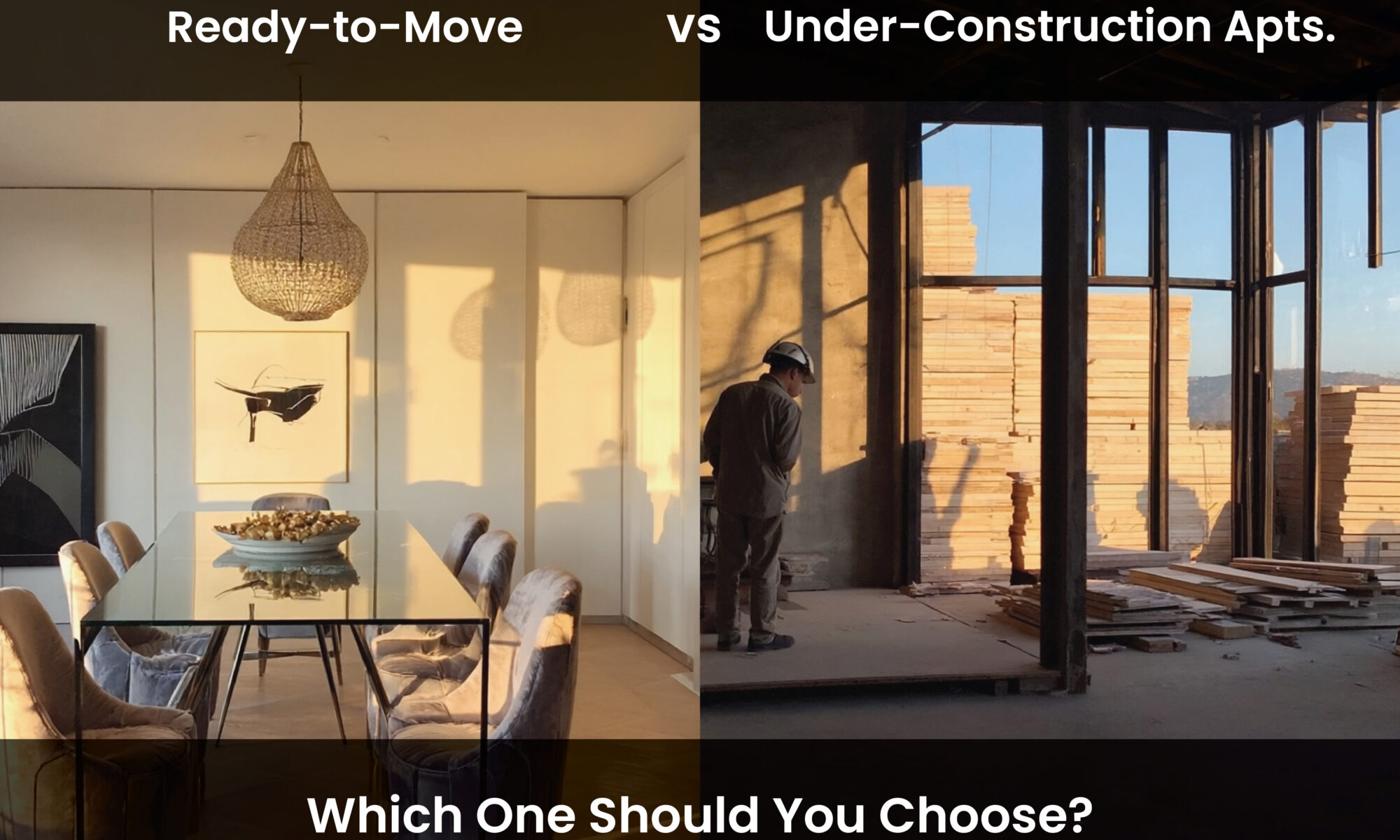
Ready-to-Move vs. Under-Construction Apartments: Which One Should You Choose?
One of the first decisions homebuyers often face is whether to purchase a ready-to-move (RTM) apartment or an under-construction (UC) property. Both options come with unique benefits and challenges. The final choice usually depends on budget, timeline, and investment goals.
Here’s a simple and clear comparison of both options based on important factors:
Comparison: Ready-to-Move vs. Under-Construction Apartments
Point of Consideration |
Ready-to-Move Apartment |
Under-Construction Apartment |
Occupancy timeline |
Immediate possession is possible, helping to avoid paying both rent and home loan EMI at the same time. |
A waiting period of 1-3 years is common, depending on the stage of construction. Some leading developers offer Pre-EMI schemes during this period, where, after the initial down payment, the homebuyer does not need to worry about the Pre-EMI until project completion, as it is borne by the developer.” |
Customisation options |
Customisation is minimal, as the interiors and layout are already completed by the builder. |
Offers flexibility for customer specific changes such as additional electrical points, selection of tiles, or installing sliding doors in balconies before completion. |
Risk factors |
Low risk since buyers can inspect the finished apartment and review legal documents before making a purchase. |
There are certain risks assciated, like possible construction delays, design changes, or project cancellations. Choosing a builder with a good track record and a RERA-registered project helps reduce this risk. |
Price |
Generally priced higher due to immediate possession and ready amenities. |
More affordable compared to ready-to-move apartments in the same location, with the potential for price appreciation as the project progresses. |
Tax benefits |
Eligible for immediate tax benefits on both principal and interest repayments after taking possession. |
Tax benefits on loan repayments can only be claimed after possession, though pre-EMI interest can be claimed later in installments. |
Rental income potential |
Can be rented out immediately, generating quick returns through rental income. |
No rental income is possible until the property is completed and ready for occupation. |
Legal documentation |
Legal paperwork is usually complete, with necessary occupancy or completion certificates available. |
Projects in the early stages may have pending approvals. Ensuring RERA registration is key to reducing legal uncertainties. |
Market value trends |
Prices are more stable as the property is ready and the current market value is clear. |
Due to the increasing price trend of properties, there is good potential for price appreciation as the project nears completion. |
Conclusion
The choice between a ready-to-move and an under-construction apartment depends on the buyer’s financial situation and priorities. A ready-to-move apartment is ideal for those seeking immediate possession with lower risk, while an under-construction property may suit those looking for affordability, customization options, and potential capital appreciation over time.
In all cases, it is essential to perform due diligence on the builder’s reputation, project approvals, and legal documentation before making a purchase. Choosing an established, RERA-registered builder with a good market reputation and goodwill ensures the safety of the investment and also timely project completion and handover. Enquiring and conducting the required due diligence, along with a project site visit—be it for a ready-to-occupy property or an under-construction one—will provide a fair picture of the project and help make an informed decision.