Green Paver Blocks
Last updated
GREEN PAVER BLOCKS
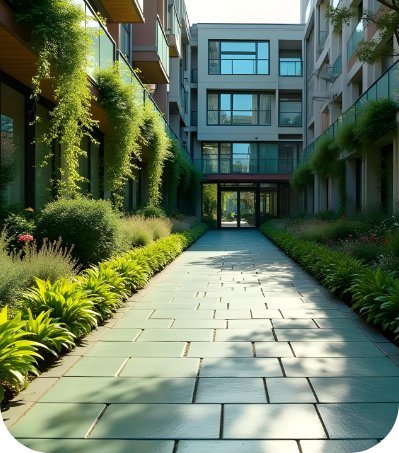
Permeable green paver blocks allow rainwater to infiltrate into the ground, reducing surface runoff, recharging groundwater, and reducing the urban heat island effect compared to conventional concrete paving.
Solid concrete and asphalt surfaces send rainwater straight into drains and heat up in the sun. Green paver blocks have open cells filled with grass or gravel, so driveways and open parking stay strong but let water soak into the ground.
How Green Paver Blocks works
- Interlocking concrete blocks with open cells are laid on a compacted, permeable base.
- The cells are filled with soil and grass or with gravel.
- Rainwater seeps through the cells into the ground instead of running off.
What it means for residents
- Better groundwater recharge and less waterlogging.
- Cooler surfaces than plain concrete or asphalt.
- More visible greenery in parking and driveway areas.
- Strong enough for vehicles while staying permeable.
Frequently asked questions
Can cars drive and park on green pavers?
Yes. The concrete grid carries the load while the grass or gravel fills the gaps.
Do green pavers help in heavy rain?
Yes. Water soaks through the open cells, which reduces runoff and puddling compared with solid paving.
How are green pavers maintained?
Grass-filled pavers are mowed and watered like a lawn. Gravel-filled ones only need the gravel topped up occasionally.
More EI Lab features
Organic Waste Composter · Water Recycling · Wells · Rainwater Harvesting · Fixtures · Drip Irrigation for Landscaping · Performance Materials · EV Charging · Solar Tube · Bio-Methanation Plant · Miyawaki Forest · Renewable Energy · PET Crushers · IGBC Certification · Condensate Water Recovery from ACs · VOC Paints · Green Pro Certified Materials · Rapidly Renewable Woods · Natural Gas Fueled Power Generators · GRIHA Certification