Drip Irrigation for Landscaping
Last updated
DRIP IRRIGATION FOR LANDSCAPING
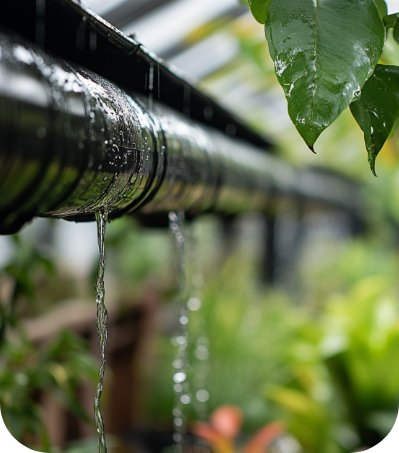
Drip irrigation systems are optimized to keep green spaces lush while conserving water. Water is delivered directly to the root zone, minimizing evaporation and runoff compared to traditional irrigation methods.
Sprinklers and hose pipes lose much of their water to evaporation and runoff. Drip irrigation delivers water slowly and directly to the roots of each plant, keeping the landscape green with a fraction of the water.
How Drip Irrigation for Landscaping works
- A network of pipes with emitters runs along planting beds, lawns edges and tree pits.
- Each emitter releases a measured amount of water at the base of the plant.
- Timers run the system early in the morning or late in the evening, when evaporation is lowest, and can use recycled water from the STP.
What it means for residents
- Much lower water use for landscaping than flood or sprinkler watering.
- Healthier plants, because roots get steady moisture without waterlogging.
- Fewer weeds, since only the plants are watered.
- Less manual effort for the maintenance team.
Frequently asked questions
Can drip irrigation use recycled water?
Yes. Treated water from the sewage treatment plant is commonly used, with a filter at the start of the line to keep emitters clear.
Does drip irrigation work for lawns?
Drip works best for shrubs, trees and planting beds. Lawns are often watered with efficient low-angle sprinklers on timers, while drip handles the rest of the landscape.
How is the system maintained?
The team flushes the lines, cleans filters and checks emitters periodically, especially before summer.
More EI Lab features
Organic Waste Composter · Water Recycling · Wells · Rainwater Harvesting · Fixtures · Performance Materials · EV Charging · Solar Tube · Bio-Methanation Plant · Miyawaki Forest · Renewable Energy · PET Crushers · IGBC Certification · Condensate Water Recovery from ACs · VOC Paints · Green Pro Certified Materials · Rapidly Renewable Woods · Natural Gas Fueled Power Generators · Green Paver Blocks · GRIHA Certification